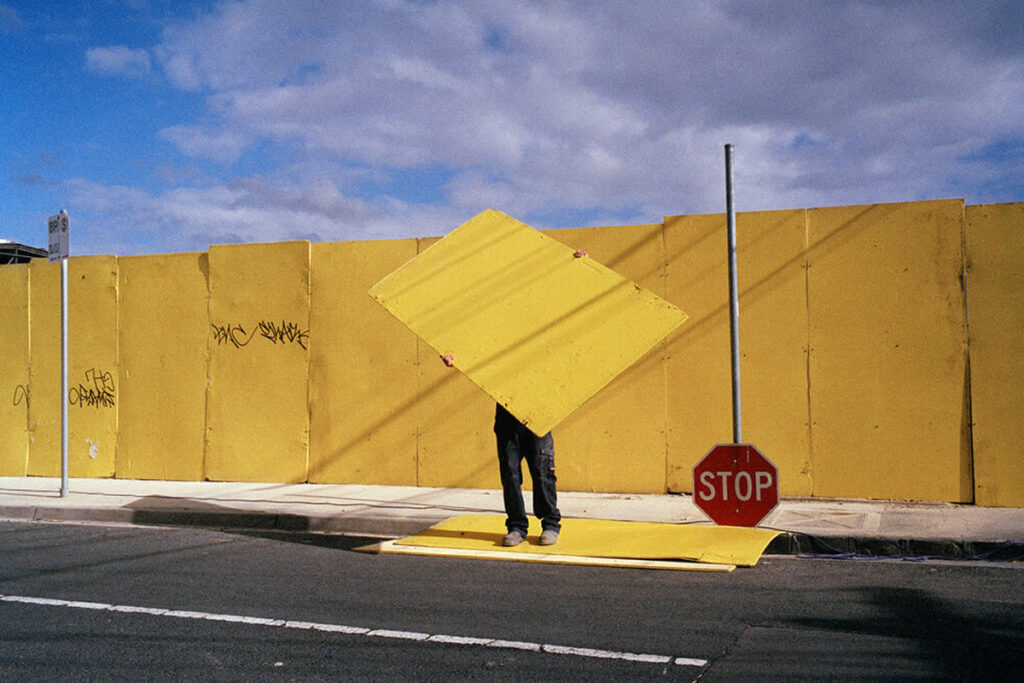
When we study the masters of modern street photography, Jesse Marlow stands out for his ability to transform the mundane into the extraordinary. His work, particularly in his acclaimed book Don’t Just Tell Them, Show Them, is defined by bold graphic composition, vibrant colors, and deep, moody shadows. Unlike photographers who rely on complex setups, Marlow’s philosophy is grounded in absolute simplicity: one camera, one lens, and an acute awareness of the environment. For years, he shot exclusively with a Leica M6 and a 35mm lens, later transitioning to the fixed 28mm lens of the Leica Q series. To replicate his distinctive “show, don’t tell” aesthetic, you don’t need a five-figure camera, but you do need the right glass.
See Price on Amazon.com:
Our Top Pick: Sigma 35mm f/1.4 DG DN ArtValue Pick: Canon RF 35mm f/1.8 Macro IS STMHigh-End Pick: Sony FE 35mm f/1.4 GM
Our team at CameraLensReviews has extensively tested prime lenses to find those that deliver the micro-contrast and sharpness necessary for this style. While Marlow’s gear is iconic, the “look” comes from the focal length and the photographer’s intent. Similar to how we analyzed what prime lens helps recreate the style of Eric Kim, we found that for Marlow, it comes down to two specific focal lengths: 35mm and 28mm.
The 35mm: The Storyteller’s Standard
For over a decade, Jesse Marlow roamed the streets of Melbourne with a 35mm lens. This focal length is the sweet spot for street photography—wide enough to include environmental context (graffiti, architecture, shadows) but tight enough to isolate the subject without significant distortion. If you are shooting with Canon, Nikon, or Sony, a fast 35mm prime is your best tool for this job.
Sigma 35mm f/1.4 DG DN Art
When we tested the Sigma 35mm f/1.4 DG DN Art, we were struck by its incredible contrast rendering right out of the gate. Marlow’s style often involves shooting in harsh Australian sunlight, using deep shadows as compositional elements. The Sigma Art series is renowned for its ability to maintain contrast even in backlit situations, minimizing flare that could wash out those crucial blacks.
The autofocus on the DG DN version is snappy, allowing for the “decisive moment” capture that street photography demands. It is slightly heavier than a dedicated rangefinder lens, but the optical quality provides that “3D pop” essential for separating your subject from a busy urban background.
The 28mm: The Wide Observer
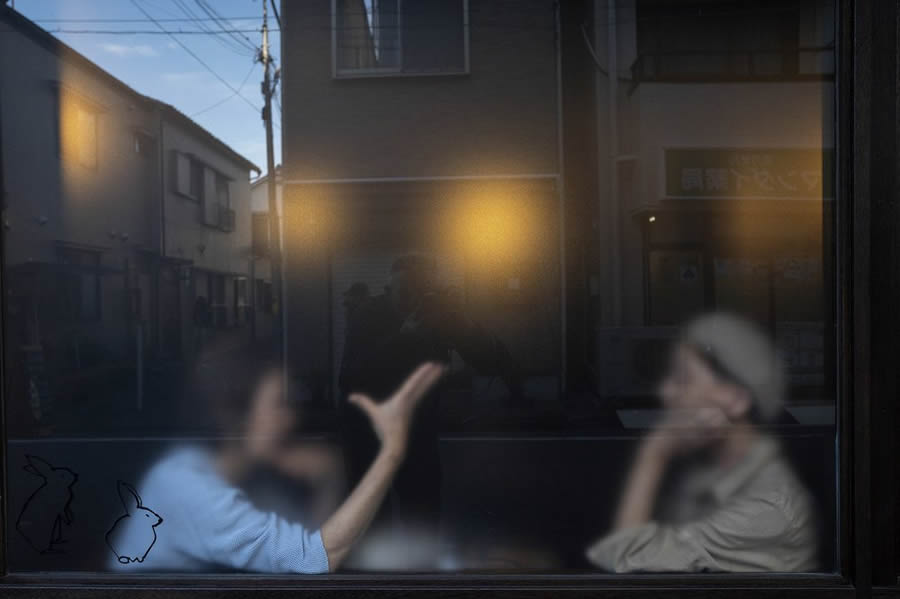
In recent years, Marlow shifted to the Leica Q system, which sports a fixed 28mm lens. This wider field of view forces the photographer to get physically closer to the subject, creating a more immersive, dynamic feel. This approach mirrors the intimacy we discussed in our guide on how to recreate the documentary style of Steve McCurry, where proximity to the subject is key.
Sony FE 28mm f/2
For photographers looking to emulate the Leica Q experience on a budget, the Sony FE 28mm f/2 is a hidden gem. It is incredibly compact and lightweight, allowing you to remain unobtrusive on the street—a core tenet of Marlow’s “blend in” philosophy. During our field tests, we found the 28mm f/2 to have excellent center sharpness. While the corners can be softer wide open, this actually works in favor of street photography, drawing the viewer’s eye toward the center of the frame where the action is happening.
Technique: Contrast and Composition
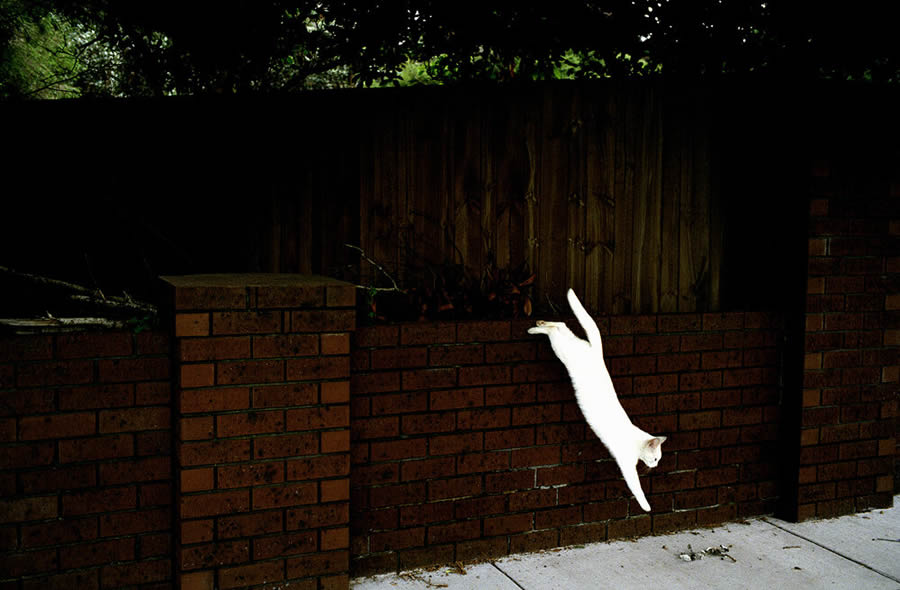
Getting the gear is only half the battle. To truly nail the Marlow look, you must master exposure. Marlow often exposes for the highlights, letting the shadows fall into deep black. This technique simplifies the composition, removing distractions hidden in the dark areas. This is similar to the high-contrast approach we see in adventure photography; see our article on what lens setup Jimmy Chin uses for a different take on managing extreme lighting conditions.
We recommend setting your camera to “High Contrast Monochrome” or a vivid color profile while shooting. This gives you immediate feedback on the geometric shapes forming in your viewfinder. Whether you choose a Sigma 35mm or a native 28mm, the goal is to let the lens disappear so you can focus purely on the geometry of the street.
Conclusion
Jesse Marlow’s work teaches us that you don’t need a bag full of zooms to capture the world. A simple prime lens, whether 28mm or 35mm, forces you to engage with your environment. By choosing a lens with high micro-contrast and fast autofocus, like the Sigma 35mm f/1.4 Art or the compact Sony 28mm f/2, you remove technical barriers and get closer to the heart of the image. For more insights on wide-angle composition, check out what wide angle lens Chris Burkard uses for epic landscapes, as many of the compositional rules apply to the urban landscape as well.
Frequently Asked Questions
What focal length does Jesse Marlow primarily use?
Jesse Marlow spent over a decade shooting with a 35mm lens on a Leica M6. More recently, he has transitioned to the Leica Q system, which uses a fixed 28mm lens.
Why does Jesse Marlow prefer prime lenses for street photography?
Marlow prefers prime lenses for their simplicity and size. He believes that using a fixed focal length forces the photographer to ‘zoom with their feet,’ resulting in more intimate and physically engaged compositions.
How can I get the high-contrast look of Jesse Marlow’s photos?
To achieve Marlow’s high-contrast look, use a lens with excellent micro-contrast coatings (like Sigma Art or Sony GM) and expose for the highlights. In post-processing, crush the shadows to black to simplify the composition.
Is a 28mm lens too wide for street photography?
Not at all. A 28mm lens is a classic street focal length used by masters like Marlow and Winogrand. It requires you to get close to your subject (often within 1-2 meters), creating a dynamic, immersive perspective.
What is a good budget lens to replicate Jesse Marlow’s style?
The Canon RF 35mm f/1.8 Macro IS STM or the Sony FE 28mm f/2 are excellent budget options. They are sharp, compact, and offer the fast apertures needed for street photography in varying light.