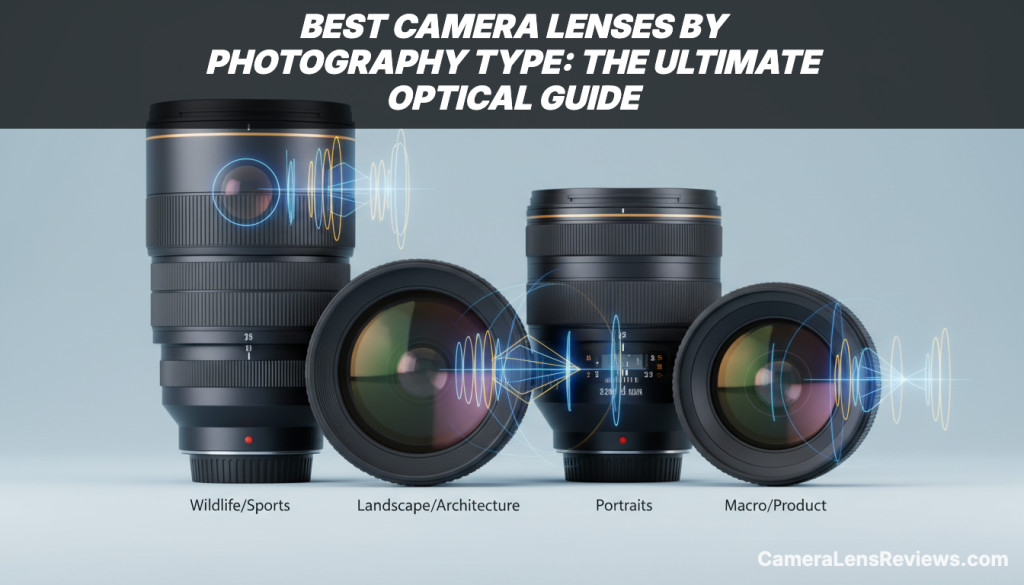
We often say that while the camera body is the brain of your setup, the lens is its soul. You can have the most advanced sensor in the world, capable of capturing 60 megapixels of data, but if the glass in front of it is resolving mushy corners or suffering from heavy chromatic aberration, that resolution is wasted. In our years of testing at CameraLensReviews, we have found that investing in high-quality glass yields a far better return on investment than constantly upgrading camera bodies. A great lens retains its value and character for decades; a camera body is often obsolete in three years. In this guide: Camera Lenses Explained, we go through all the concepts brands and more.
See Price on Amazon.com:
Our Top Pick: Sony FE 24-70mm GM IIValue Pick: Sigma 35mm f/1.4 ArtHigh-End Pick: Canon RF 85mm f/1.2 L
This guide is designed to deconstruct the technical jargon surrounding optics. Whether you shoot landscapes, portraits, or sports, understanding the physics of light transmission, focal length compression, and aperture blades is critical. We will break down the key specifications you need to look for and explain why certain lenses, like the “Holy Trinity” of zooms, are staples in every professional’s bag.
Understanding Focal Length and Angle of View
Focal length, measured in millimeters, is the primary descriptor of any lens. It determines your angle of view (how much of the scene is captured) and the magnification of the subject. Lower numbers (e.g., 16mm, 24mm) indicate a wide angle of view, perfect for sweeping landscapes or architecture. Higher numbers (e.g., 85mm, 200mm, 600mm) indicate telephoto reach, which isolates distant subjects and compresses the background.
When selecting a lens, you must also consider your camera’s sensor size. A 50mm lens on a full-frame camera behaves like a “standard” lens, mimicking the human eye’s field of view. However, on an APS-C crop sensor, that same lens behaves more like a 75mm telephoto. This is why it is crucial to check compatibility when browsing Canon lenses or Fujifilm lenses, as mount systems often have both full-frame and crop-sensor specific glass.
Aperture: The Gateway to Light and Bokeh
The aperture is the opening in the lens diaphragm through which light passes. It is measured in f-stops (e.g., f/1.4, f/2.8, f/11). Counterintuitively, a lower f-number means a larger opening. A “fast” lens, such as one with an f/1.2 or f/1.4 maximum aperture, allows significantly more light to hit the sensor, enabling faster shutter speeds in low light.
Beyond exposure, aperture controls depth of field. Wide apertures create a shallow depth of field, rendering the background into a soft, creamy blur known as “bokeh.” This is highly desirable for portraiture. Conversely, landscape photographers often stop down to f/8 or f/11 to ensure everything from the foreground rocks to the distant mountains is sharp.
The Standard Zoom: The Workhorse
If you could only own one lens, it would likely be the 24-70mm f/2.8. This focal range covers everything from wide landscape shots (24mm) to documentary street photography (35mm-50mm) and short telephoto portraits (70mm). The constant f/2.8 aperture allows for consistent exposure settings even as you zoom.
Reference Lens: Sony FE 24-70mm f/2.8 GM II
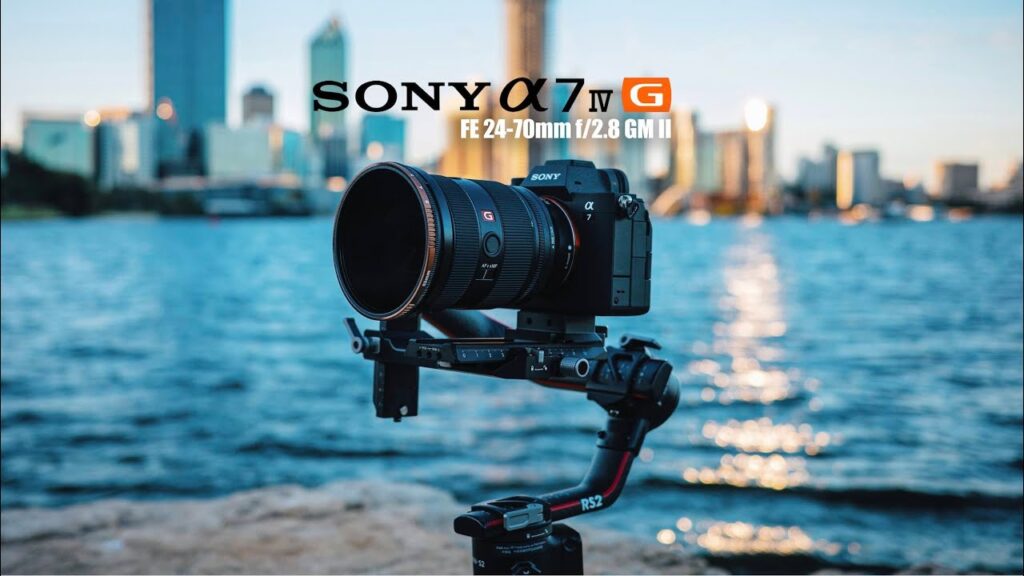
In our optical lab tests, the Sony FE 24-70mm GM II has set a new benchmark for standard zooms. Historically, zoom lenses were considered inferior to primes regarding sharpness, but this lens challenges that notion. Sony has utilized extreme aspherical (XA) elements to virtually eliminate onion-ring bokeh and maintain corner-to-corner sharpness even at f/2.8. It is also the lightest lens in its class, making it a favorite for event photographers who need to carry gear all day. The autofocus is driven by four XD linear motors, providing near-instantaneous subject tracking.
The Fast Prime: Ultimate Optical Quality
Prime lenses have a fixed focal length (they do not zoom). Because the optical engineers do not have to design moving groups of glass to accommodate zooming, they can optimize the lens for a single focal length. This typically results in superior sharpness, less distortion, and wider maximum apertures (f/1.2 or f/1.4) compared to zooms.
Reference Lens: Canon RF 50mm f/1.2 L USM
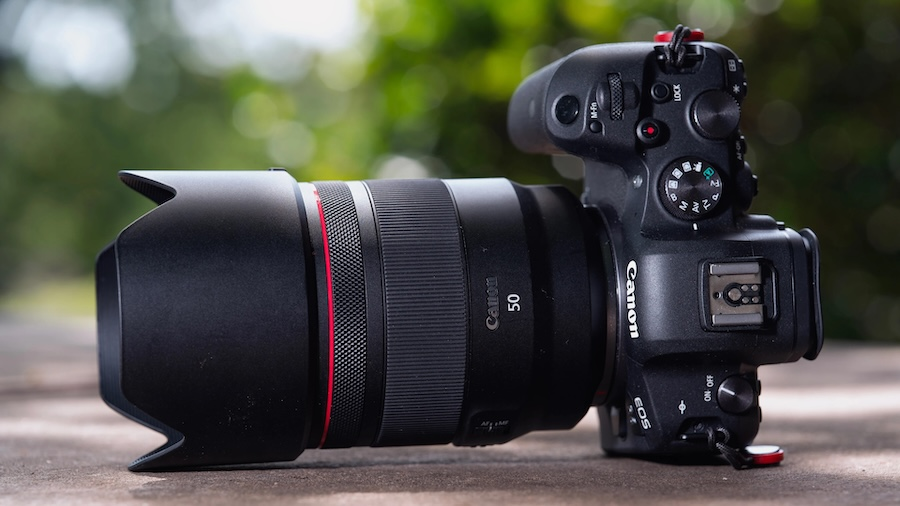
The Canon RF 50mm f/1.2 L USM is a testament to what is possible with the new large-diameter RF mount. When we tested this lens, we were astounded by the resolving power at f/1.2. Most lenses are soft when shot wide open, but this optic delivers crisp details right to the edges of the frame. It uses a complex arrangement of ground aspherical elements and UD glass to correct chromatic aberration, a common flaw in ultra-fast lenses. It is large, heavy, and expensive, but for Canon lenses shooters, it offers a rendering that is simply impossible to replicate with a zoom.
The Telephoto Zoom: Compression and Reach
A 70-200mm f/2.8 is the second member of the “Holy Trinity.” It is essential for sports, wildlife, and weddings. The longer focal length creates a phenomenon known as “compression,” where the background appears to be pulled closer to the subject. This effect is flattering for portraits and helps to isolate the subject from a cluttered environment.
Reference Lens: Nikon Z 70-200mm f/2.8 VR S

Nikon has a long history of legendary telephotos, and the Z 70-200mm f/2.8 VR S is the pinnacle of that lineage. Our field tests confirmed that the Vibration Reduction (VR) on this lens is exceptional, allowing for sharp handheld shots at shutter speeds as slow as 1/10th of a second. Optically, it rivals prime lenses in sharpness. It also features an integrated OLED information panel, which can display aperture, focus distance, or exact focal length—a feature we found incredibly useful for precision work. For those invested in Nikon lenses, this is a non-negotiable piece of kit.
Lens Mounts and Third-Party Options
One of the most common questions we receive is about compatibility. You cannot mount a Sony lens on a Nikon body without an adapter, and even then, autofocus performance often suffers. However, the market has opened up significantly. Manufacturers like Sigma and Tamron now produce incredible third-party lenses that often rival the native options from Sony, Canon, and Nikon at a fraction of the price. For example, the Sigma Art series has become a staple for professionals who need high performance without the proprietary price tag.
When buying, always verify the mount type. Sony uses E-mount, Nikon uses Z-mount (and the older F-mount), and Canon uses RF-mount (and the older EF-mount). Sony lenses currently have the widest selection of third-party autofocus options, giving E-mount users a significant advantage in terms of budget flexibility.
Conclusion
Buying a lens is a commitment to a system and a style of photography. While camera bodies come and go, good glass is forever. Whether you choose the versatility of a 24-70mm zoom or the artistic rendering of a 50mm f/1.2 prime, prioritize optical quality over convenience. Your images will thank you.
Frequently Asked Questions
What do the numbers on a camera lens mean?
The two most important numbers are the focal length (e.g., 50mm) and the maximum aperture (e.g., f/1.8). Focal length determines the zoom level: lower numbers are wide-angle, while higher numbers are telephoto. The f-number indicates how much light the lens can let in; lower numbers (f/1.4) let in more light and create more background blur than higher numbers (f/4).
Should I buy a prime lens or a zoom lens?
It depends on your needs. Zoom lenses (like an 18-55mm or 24-70mm) offer versatility, allowing you to change your framing without moving your feet, making them ideal for travel and events. Prime lenses (fixed focal length like 35mm or 50mm) generally offer superior image sharpness, better low-light performance (wider apertures), and are often lighter, but they require you to move to compose your shot.
What is the ‘Holy Trinity’ of camera lenses?
The ‘Holy Trinity’ refers to a set of three f/2.8 zoom lenses that cover the vast majority of focal lengths a professional needs. This typically includes a wide-angle zoom (14-24mm or 16-35mm), a standard zoom (24-70mm), and a telephoto zoom (70-200mm). Owning this trio allows a photographer to handle almost any assignment from landscapes to sports.
Can I use third-party lenses like Sigma or Tamron on my camera?
Yes, provided you buy the version with the correct mount for your camera. Third-party manufacturers like Sigma and Tamron produce high-quality lenses for Sony E-mount, Nikon Z-mount, Canon RF-mount, and others. We often find that their ‘Art’ or ‘G2’ series lenses offer optical performance that rivals native manufacturer lenses at a significantly lower price point.
Does a better lens improve image quality more than a new camera?
In almost every case, yes. A high-quality lens will improve sharpness, contrast, color rendering, and autofocus speed on an older camera body. Conversely, putting a cheap, low-quality lens on a brand-new, high-resolution camera will result in soft images because the lens cannot resolve the detail the sensor is capable of capturing. We always recommend upgrading glass before bodies.