For years, the golden rule of photography was simple: if you want the best quality, buy “native” glass. However, the landscape has shifted. Brands like Sigma, Tamron, and Samyang are now producing lenses that not only rival Sony, Canon, and Nikon in performance but often beat them in price and innovation. In this guide, we break down the best third-party lenses for the major camera systems, focusing on the balance between value and performance.
Why Choose Third-Party Lenses?
The primary driver for choosing a third-party lens is value. You can often find a lens with the same aperture and focal length as a native lens for 40% to 60% of the cost. However, modern third-party lenses also offer:
- Unique Focal Lengths: Designs that native manufacturers don’t offer (e.g., the Tamron 35-150mm f/2-2.8).
- Weight Savings: Many third-party lenses use high-quality composites to reduce weight for travel.
- Competitive Sharpness: Sigma’s “Art” line is world-renowned for exceeding the resolution capabilities of many flagship native lenses.
Best Third-Party Lenses for Sony (E-Mount)
Sony’s open-mount policy has made it the king of third-party options. There is more high-quality glass available for Sony E-mount than any other mirrorless system.
1. Sigma 24-70mm f/2.8 DG DN Art
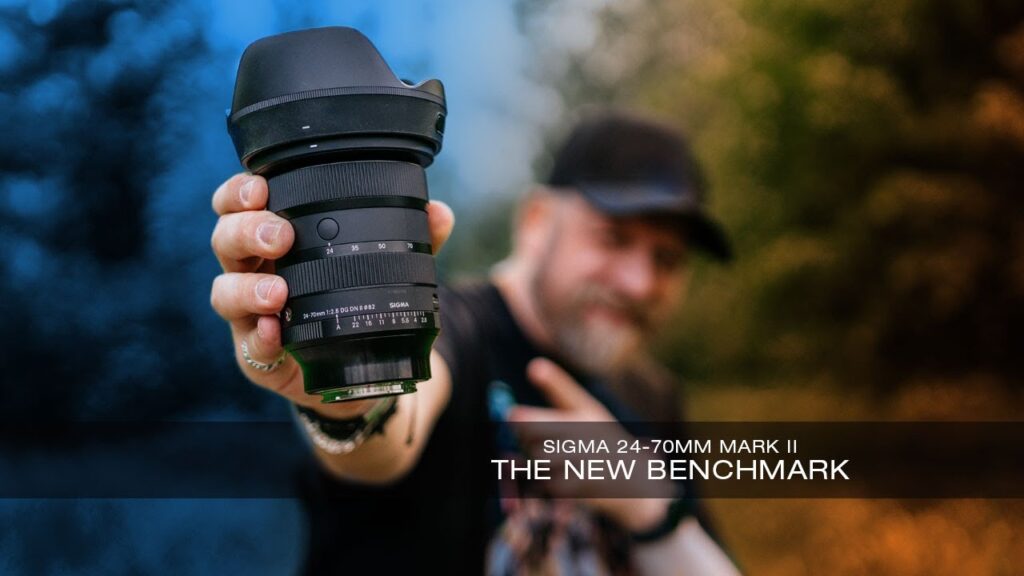
This is the ultimate alternative to the Sony 24-70mm GM II. It offers professional-grade sharpness and a constant f/2.8 aperture for nearly half the price. It is the “workhorse” lens for wedding and event photographers.
2. Tamron 28-75mm f/2.8 Di III VXD G2
If you value portability and price over that extra 4mm of width at the wide end, this is the best value zoom lens on the market. It’s incredibly light, sharp, and features a fast autofocus motor.
3. Samyang AF 35mm f/1.8 FE
For street photographers on a budget, this Samyang lens offers a tiny footprint and surprisingly beautiful bokeh. It is proof that you don’t need to spend $1,000+ for a “fast” prime lens.
Best Third-Party Lenses for Canon (RF and EF Mount)
While Canon has been more restrictive with third-party autofocus for the RF mount, the situation is changing. Additionally, EF-mount third-party lenses perform flawlessly on mirrorless bodies via the EF-EOS R adapter.
1. Sigma 18-35mm f/1.8 DC HSM Art (EF/APS-C)
Widely considered one of the best lenses ever made for crop-sensor cameras. With a constant f/1.8 aperture, it provides a look that was previously only possible on full-frame systems. It is a favorite for gimbal-based videographers.
2. Tamron SP 70-200mm f/2.8 Di VC USD G2 (EF)
For Canon DSLR users or those adapting to the R-series, this lens offers stabilization (VC) that rivals Canon’s “L” series at a fraction of the cost. It’s a staple for sports and portrait photography.
3. Sigma 85mm f/1.4 DG DN Art (RF Mount – Recently Announced)
As Sigma begins its official entry into the RF mount, their 85mm Art lens is set to become the “gold standard” for portraiture, offering clinical sharpness and creamy backgrounds that compete with the legendary Canon RF 85mm f/1.2.
Best Third-Party Lenses for Nikon (Z and F Mount)
Nikon Z users have recently seen a surge in third-party options, as Nikon has begun officially licensing their mount technology to brands like Tamron.
1. Tamron 70-300mm f/4.5-6.3 Di III RXD (Z-Mount)
This is the lightest and smallest telephoto zoom for Nikon Z-mount full-frame cameras. For hikers and wildlife photographers who need to save weight without sacrificing image quality, this is an unbeatable value.
2. Sigma 35mm f/1.4 DG HSM Art (F-Mount/Adapted)
A lens that changed the industry. Even when used with the FTZ adapter, this lens provides incredible resolution. It is a “must-have” for Nikon users who want the “Art” look without the price tag of Nikon’s S-line primes.
3. Samyang MF 14mm f/2.8 (Z-Mount)
For astrophotography, you don’t need autofocus. This manual focus ultra-wide lens is a budget favorite for capturing the Milky Way, offering excellent coma control and a massive field of view.
Value vs. Performance: What Are the Trade-offs?
When choosing between a $2,000 native lens and a $900 Sigma or Tamron, it’s important to understand where the differences lie:
Autofocus Speed
Native lenses (Sony GM, Canon L, Nikon S) usually have a slight edge in burst shooting. If you are shooting professional sports at 30 frames per second, native glass is often the more reliable choice.
Weather Sealing
While “Art” and “G2” lenses have excellent weather sealing, native professional lenses are often built to withstand more extreme environments (monsoons, desert sand, etc.).
Resale Value
Native lenses tend to hold their value better over a 5-10 year period. However, because the initial investment for third-party glass is lower, the “total cost of ownership” is often still lower for brands like Tamron and Sigma.
Final Verdict
The gap between native and third-party lenses has never been smaller. For most photographers—from enthusiasts to working pros—the Sigma Art and Tamron G2 series provide 95% of the performance for roughly 60% of the price. If you are looking to expand your kit without breaking the bank, these third-party options are no longer a compromise; they are a smart investment.