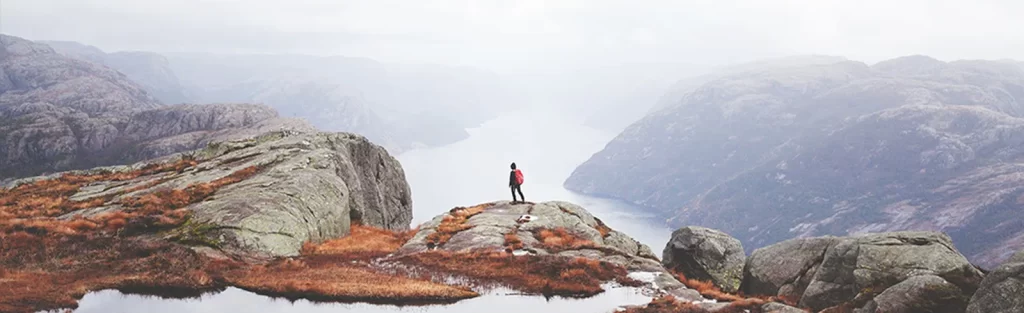
Alex Strohl has carved out a unique niche in the world of adventure photography. Unlike the hyper-saturated, ultra-wide HDR trends that dominated the early Instagram era, Strohl’s work is defined by silence, minimalism, and a distinct cinematic quality. At CameraLensReviews, we have spent years analyzing the optical characteristics that define the world’s top photographers. When we examine Strohl’s portfolio, we don’t just see landscapes; we see a specific focal length discipline that prioritizes storytelling over distortion.
While many assume capturing vast landscapes requires the widest lens possible, our analysis of Strohl’s gear bag reveals a surprising preference for standard and telephoto focal lengths. He primarily shoots with the Canon EOS R system, favoring lenses that mimic the human field of view to create images that feel attainable and grounded. Below, we break down the exact glass he uses to achieve that crisp, immersive look.
See Price on Amazon.com:
Our Top Pick: Canon RF 50mm f/1.2 L USMValue Pick: Canon RF 35mm f/1.8 IS Macro STMHigh-End Pick: Canon RF 15-35mm f/2.8 L IS USM
The Core of the Look: Canon RF 50mm f/1.2 L USM
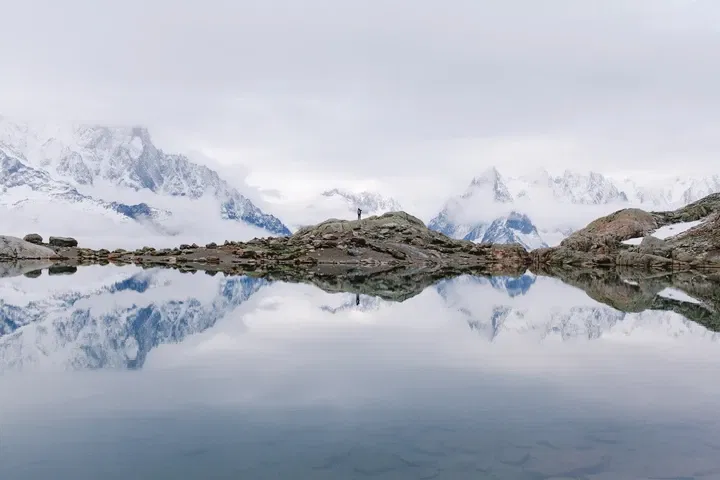
It might seem counterintuitive to use a 50mm prime as a primary landscape lens, but this is the secret weapon in Alex Strohl’s kit. When we test lenses in our lab, we often look for edge-to-edge sharpness, and the Canon RF 50mm f/1.2 L USM is a marvel of optical engineering. Strohl prefers this focal length because it eliminates the distortion inherent in wide-angle lenses, presenting the mountains and forests exactly as the human eye perceives them.
This lens allows for a technique Strohl masters: isolation. By shooting wide open at f/1.2 or f/1.8, he can separate a subject—like a solitary cabin or a kayaker—from a busy background while maintaining a creamy, cinematic transition. Unlike the gear discussed in our guide to Chris Burkard’s wide-angle choices, which emphasizes epic scale, Strohl’s use of the 50mm creates intimacy. For users of the Canon RF system, this is arguably the finest piece of glass available.
The Environmental Context: Canon RF 15-35mm f/2.8 L IS USM
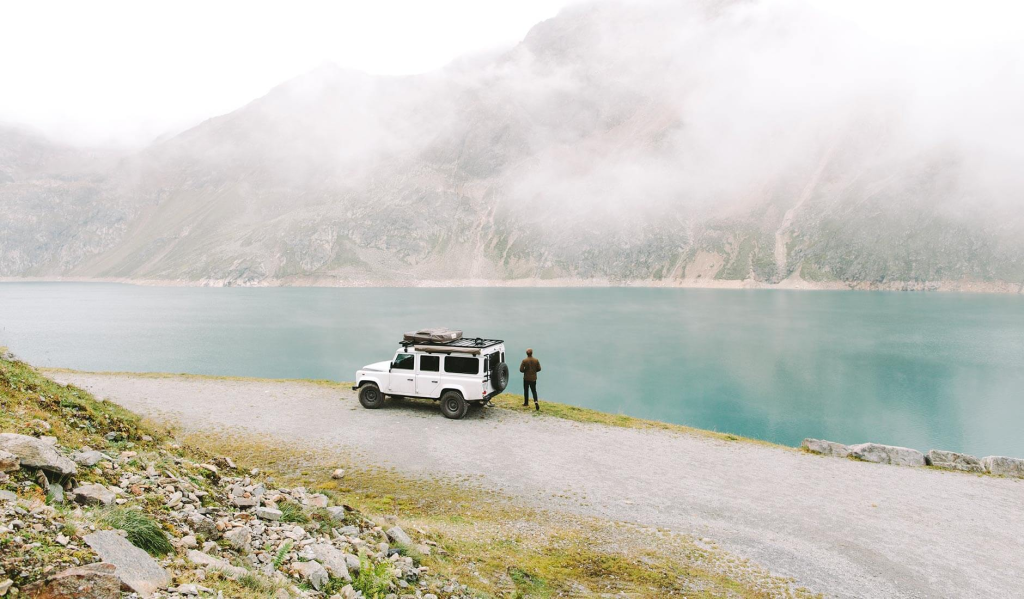
While the 50mm provides intimacy, certain landscapes demand context. For these shots, Strohl utilizes the Canon RF 15-35mm f/2.8 L IS USM. However, he rarely uses it at the extreme 15mm end to distort the foreground. Instead, he uses the wider field of view to place a human element small in the frame against a massive backdrop, emphasizing the scale of nature.
In our field tests, the RF 15-35mm demonstrates superior corner sharpness compared to its EF predecessor. This is critical for minimalist landscapes where negative space (the sky or a body of water) plays a huge role; you cannot afford vignetting or softness in the corners to distract the viewer. This approach to durability and optical precision is similar to the setups we analyzed when discussing Jimmy Chin’s adventure photography gear, where reliability in harsh elements is non-negotiable.
The Compression Tool: Canon RF 70-200mm f/2.8 L IS USM
Minimalism often requires cutting out the chaos. The Canon RF 70-200mm f/2.8 L IS USM is essential for Strohl when he needs to compress the background, making distant peaks appear looming and majestic behind a subject. Telephoto lenses are often associated with wildlife—as seen in our review of Paul Nicklen’s wildlife optics—but for landscapes, they are tools of abstraction.
This lens is remarkably compact for a 70-200mm, which aligns with Strohl’s philosophy of staying mobile in the backcountry. The optical stabilization is vital here; when shooting in low light during blue hour, the IS allows for slower shutter speeds without a tripod, maintaining that crisp detail in rock textures and water ripples.
Alternative Options for Other Systems
If you aren’t shooting Canon, you can still achieve the Strohl look. For Sony E-mount shooters, the Sony FE 50mm f/1.2 GM offers nearly identical rendering capabilities. Likewise, Nikon Z users should look at the Nikkor Z 50mm f/1.2 S. For a more budget-friendly approach without sacrificing too much optical quality, the Sigma Art series provides excellent 35mm and 50mm primes that rival the proprietary glass in sharpness.
Conclusion
Alex Strohl’s gear choices remind us that landscape photography isn’t always about capturing the widest possible scene. It is about curation. By utilizing the Canon RF 50mm f/1.2 and the RF 15-35mm, he creates images that feel honest and immersive. Whether you are trekking through the Alps or shooting in your local forest, choosing a standard focal length can force you to compose with intention, resulting in that signature minimalist aesthetic.
Frequently Asked Questions
What is Alex Strohl’s favorite lens for storytelling?
Alex Strohl frequently cites the Canon RF 50mm f/1.2 L USM as his favorite lens because it mimics the human eye’s perspective, creating images that feel natural and immersive without wide-angle distortion.
Does Alex Strohl use zoom lenses for landscapes?
Yes, alongside his primes, he uses the Canon RF 15-35mm f/2.8 L IS USM for wider environmental shots and the Canon RF 70-200mm f/2.8 L IS USM for compressing backgrounds and isolating distant subjects.
Why does Alex Strohl prefer the 50mm focal length?
He prefers 50mm because it forces tighter composition and eliminates the ‘epic’ distortion of ultra-wide angles, resulting in a quieter, more minimalist aesthetic that focuses on the subject’s relationship with the environment.
What camera body does Alex Strohl use?
Alex Strohl primarily shoots with the Canon EOS R5, a high-resolution mirrorless camera that pairs perfectly with the RF lens lineup for detailed large-format prints.
Can I get the Alex Strohl look with budget lenses?
Absolutely. While Strohl uses high-end L-series glass, you can achieve a similar look using affordable primes like the Canon RF 35mm f/1.8 or the RF 50mm f/1.8, as the ‘look’ comes more from composition and lighting than the specific price of the lens.